Monday, March 16, 2015

1930 - 1940

1930 - 1940

Wall street crash 

The Wall Street Crash, also known as Black Tuesday began in late October 1929 and was the most devastating stock market crash in the history of the United States, when taking into consideration the full extend and duration of its fallout. The crash signalised the beginning of the 10-year Great Depression that affected all Western industrialised countries. 
A huge class difference had opened up between rich and poor. This time made a change fashion. People started making clothes to last longer and fashion style became to be more 'classic' so they would stay in style. 


Fashion

In the 1930s there was a return to a more genteel, ladylike appearance. Budding rounded busts and waistline curves were seen and hair became softer and prettier as hair perms improved. Foreheads which had been hidden by cloche hats were revealed and adorned with small plate shaped hats. Clothes were feminine, sweet and tidy by day with a return to real glamour at night. Right - Fashionable sleek day dress of 1936.


Almost everyone wore hat or cap when going out (both male and female).


Hollywood

Marlene Dietrich

Znalezione obrazy dla zapytania marlene dietrich
 Actress and singer Marlene Dietrich was born Maria Magdalene Dietrich on December 27, 1901, in Berlin, Germany. One of the most glamorous leading ladies of the 1930s and 1940s, Marlene Dietrich is remembered for her soldering sex appeal, distinctive voice, and unusual personal style.Dietrich’s career in Germany began to take off in the late 1920s. Making film history, she was cast in Germany’s first talking picture Der Blaue Engel (1930) by Hollywood director Josef von Sternberg. An English language version, The Blue Angel, was also filmed using the same cast. With her sultry good looks and sophisticated manner, Dietrich was a natural for the role of Lola Lola, a nightclub dancer. The film follows the decline of a local professor who gives up everything to have a relationship with her character. A big hit, the film helped make Dietrich a star in the United States.


A new Silhouette 

In 1940 styles began to pare down losing the late thirties softness.  As war took hold, garments later became rationed.  Many of the dresses shown here have shoulder and gathering emphasis which also highlights a narrow waistline. Suits take on a crisp boxy look which when teamed with a shorter length skirt kept fabric to a minimum. In these drawings high V-necklines predominate.


Invention of nylon fibre

By the 1940’s, stockings had become an essential part of a woman’s attire. At the time, silk stocking were expensive and didn’t last, neither cotton or wool were dressy, and rayon sagged. Nylon stockings hit the shelves of New York City on May 15, 1940. By the end of the day, nearly 780,000 pairs had been sold. By the end of 1940, 64 million pairs of nylons had been sold. Nylons had affordability, a good fit, good looks, and mass appeal. A year later, this little problem came along called World War II and the three most common sheer stocking materials – silk, nylon, and rayon – were almost impossible to come by. Like a lot of materials, these materials were being used in the war effort.
Some women starting wearing socks folded over at the top of the ankle, but a lot of women started applying leg makeup and would even go so far as drawing a line with an eyebrow pencil down the back of each leg to give the appearance of wearing back seam stockings. 
It was Max Factor that actually introduced a stocking cream to give the illusion of stockings, and there were department stores that would set up a Leg Make-Up Bar.

Monday, March 2, 2015

1910 - 1920

1910 - 1920

Paul Poiret 

He was a French fashion designer during the first two decades in 20th century. Poiret energetically led a movement away from the full, curvy silhouette of the 1900s towards a long lean empire silhouette. 

"He was personally responsible for releasing women from the tyranny of corsets”
     In the 1910s during the heyday of his design career, Poiret was known as “The King of Fashion”, or even more impressively in Paris as Le Magnifique. Innovating beyond the corseted silhouette that horizontally slices the female figure in two, Poiret sought to move fashion beyond the restrictive undergarment that had clung to women’s torsos for centuries.


The 'modern fashion' era 

Womens fashion in the early 1920's experienced dramatic changes following the end of the first world war,  the boyish look became quite popular.The waist completely disappeared, and belts were worn around the hips. Straight, curve less dresses were worn with bust flattening brassieres, they became lighter and brighter and shorter than ever before. Fashion designers played with fabric colors, textures and patterns to create totally new styles of dress. Evening dresses, coats and jackets were often trimmed with fur. Hemlines rose for most of the decade but dropped slightly toward the end.

Pantsuits, hats and canes that gave women a sleek look without frills were popular for a while. The style was named after the novel La garçonne by Victor Margueritte. In Europe, this look featured women with short hair, for the first time in the U.S., 'the bob' hairstyle was reintroduced by actress Louise Brooks in the late 1920s. 


http://www.uvm.edu/landscape/dating/clothing_and_hair/1930s_clothing_women_files/image002.jpg 

'The bob' hairstyle


     Cultural changes after World War I were vast, and men's fashion in the 1920s went through as radical a transformation as women's, although it's much less discussed in the annals of fashion and cultural history. Men were obligated to keep an extensive wardrobe and dress appropriately. Clothing gradually became less formal and the lounge suits became prominent. For the workplace or most daily business, men of all ages wore suits. However, whereas suits had traditionally been broad-shouldered, they were now cut to give men a more slim, boyish look. 

 The first World War 
 The first war had a big impact on fashion design, fabrics and manufacture. 
Women in the Army 
     Women who worked in mines before the war wore trousers, they would cover them up with skirts during time off. Those in the Land Army didn’t have trousers as regulation uniform despite the practical advantages – they were more likely borrowed from male members of the family. It was decades before trousers became acceptable for women away from the tennis court. 
Land girls in trousers
Makeup
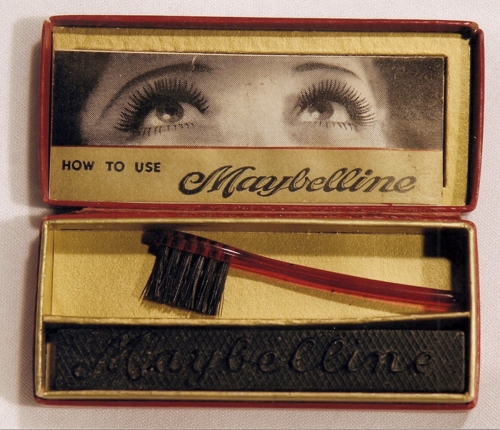
    Makeup became more established during the war. Maybelline started in 1915 and it coincided with the appearance of wearing makeup. Becoming more acceptable as working-class women who could now afford it. Powder, kohl eyeliner and mascara were popular. Helena Rubenstein reported an upsurge demand for face creams from wealthier women volunteering as nurses on the front.

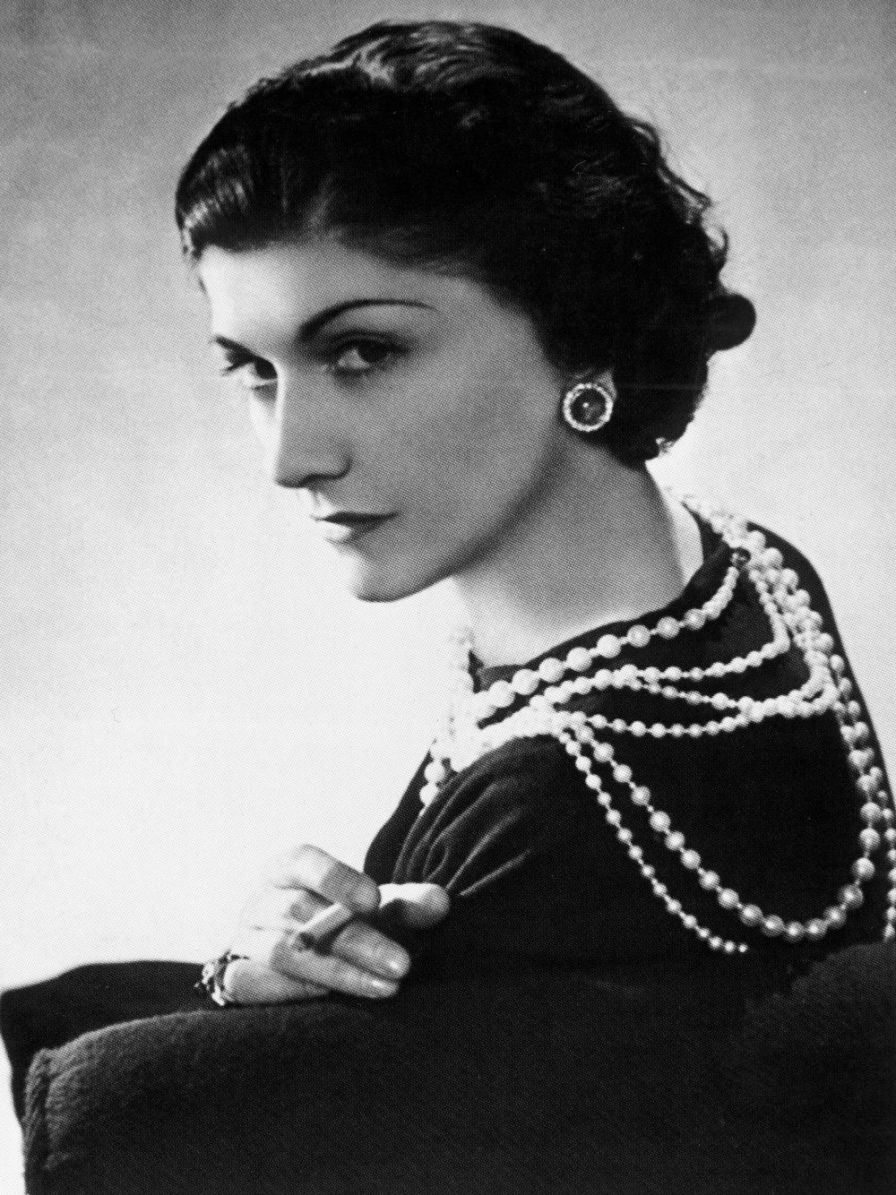
Coco Chanel  

Coco Chanel's rise began during World War One. Her frills-free designs chimed with the straitened times. Her first shop opened in Deauville n 1913 and became a favorite with wealthy women who bought her reworked sportswear. Another store opened two years later in Biarritz and by 1916, news of her work had reached the American press. Her rise had begun in earnest. 

Body hair was on its way out

  Women’s uniforms had shorter skirts than were customary in 1914 – they were now at six to 10 inches off the ground. The reveal of a bit of leg was part of the change in perception of body hair, from something erotic to something unsightly. Gillette introduced Milady Decollete razors in 1915. Shaving legs became part of standard female grooming.


Friday, February 27, 2015

1900 - 1910

1900 - 1910

The Ballets Russes (The Russian Ballets)

The Balleys Russes was a ballet company from Russia which performed between 1909 and 1929 in many countries. It was directed by Sergei Diaghilev, it is regarded as the greatest ballet company of the 20th century. The Ballets Russes was noted for the high standard of its dancers, most of whom had been classically trained at the great Imperial schools in Moscow and St. Petersburg. Their high technical standards contributed a great deal to the company's success in Paris, where dance technique had declined markedly since the 1830s. 


Ballets Russes poster


Women's outfit for one of the performances


Some of the outfits they wore for the performances


Lewis Hine

He was an American sociologist and photographer who used his camera as a tool for social reform. His photographs were instrumental in changing the child labor in the United States. This amazing person took four years of his life to show extremely bad conditions in which some children had to work. His documentaries had a huge impact on the the law which was then changed as well as the minimum age at which children could start working. 


Most of the children were not able to write or read. They worked from the morning to the evening. From some of them, they required 13 hours of work and they worked for a minimum wage. Kids usually had to do the work that was rather suitable for adults. 
Hine believed that his photographs could finally change something and 'wake up' the conscience of society, which should of reduced child labor. 
After a lot of people saw his photographs, his effort finally worked. They started to fight for children's rights and the law got changed. A lot of children stopped working in factories and mines. 


Liberty

Liberty is one of the last great emporiums for innovative and eclectic design. Situated in the heart of London since 1875, it remains to this day the destination of choice for the savvy and sophisticated shopper. The store became the most fashionable place to shop in London and Liberty fabrics were used for both clothing and furnishings. 


The Edwardian corsets and the "S" bend


The straight-front corset, also known as the swan-bill corset, the S-bend corset or the health corset, was worn from circa 1900 to the early 1910s. It's name is derived from the very rigid, straight busk inserted in the centre front of the corset. This corset forced the torso forward and made the hips jut out in back. 


The straight-front corset was popularised by Inez Gaches-Sarraute, a courtesies with a degree in medicine. It was intended to be less injurious to wearers' health than other corsets in that it exerted less pressure on the stomach area. However, any benefits to the stomach were more than counterbalanced by injury caused to the back due to the unnatural posture that it forced upon its wearer. At this time, the bust lowered and corsets provided much less support for the breasts. 


Belle epoque

The Belle Époque or La Belle Époque  was a period in the European history that is conventionally dated as starting in 1871 and ending when World War I began in 1914. Occurring during the era of the French Third Republic, it was a period characterised by optimism, peace at home and in Europe, new technology and scientific discoveries. The peace and prosperity in Paris allowed the arts to flourish, and many masterpieces of literature, music, theatre and visual art gained recognition. The Belle Époque was named, in retrospect, when it began to be considered a "golden age" in contrast to the horrors of World War I.

Fashion:

By 1895 - leg of mutton sleeves swelled 
to gigantic proportions and were also 
used on décolleté evening dresses. The 
size of the sleeves was highlighted by the 
comparison of the tiny sashed or belted 
waist against the simple gored skirt that 
flared out all round to balance the 
massive sleeve heads.

High neck blouse - high necks were usual 
by day, but by night exceptionally low sweetheart, square and 
round décolleté necklines allowed women to wear quantities of fine  jewellery. No cleavage was visible as the bust was suppressed into 
a mono bosom. The skirts were often gored and created an 
elongated trumpet bell shape like the gently opening head of a 
longiflorum lily. Modified versions were less extreme over the 
hips, simply flowing to more width at the hemline.

Bodice pouched Edwardian day dresses - at the front of the 
bodice, pouches of cascading lace or gathered fabric gave 
emphasis to the low bust line. The straight sleeves of the late 
1890s developed into bloused effects gathered into 
wrist bands. Very deep high lace fabric collars that reached right 
under the chin elongated the neck. They were often kept in place 
with wire covered in silk that was twisted into a series of hooks 
and eyes from one piece of wire. Little wire or boning 
supports covered with buttonhole silk were sometimes dispersed 
every few inches of the collar to maintain the rigid effect.